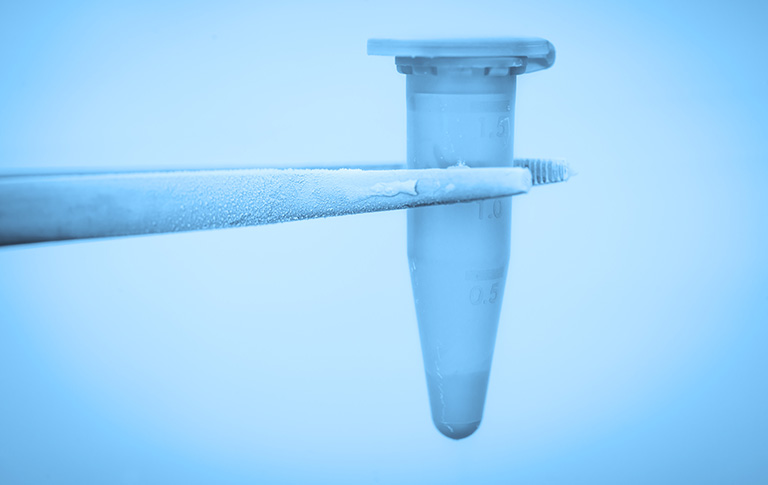

Egg or oocyte freezing is a form of fertility preservation that involves collecting your unfertilised eggs, freezing them through a specialised technique called vitrification, and then storing them in our embryology laboratory. These eggs can then be thawed and used in IVF when you’re ready to start your family.
Since your natural fertility declines with age as does the quality of your eggs, as soon as you have a fertility concern where egg freezing may be a solution, it’s important to see a fertility specialist. This can take some forward planning particularly if you’re still young with a healthy ovarian reserve. However, if you know you have a risk of a condition that can impact your future fertility then Dr Reyftmann recommends you have a consultation to explore your options early.
Prior to embarking on the rest of the egg freezing process, Dr Reyftmann will conduct a fertility assessment. This ensures that egg freezing is a suitable solution for you and that you’re not at an unacceptably higher risk of complications during the ovarian stimulation or egg retrieval phases.
Common tests involved in this assessment include a blood test investigating your hormone levels and your egg reserve as well as screening for sexually transmitted infections such as hepatitis B, C, HIV, and syphilis. We also organise a pelvic ultrasound to give us more detail about your ovarian health and to get an antral follicle count, which provides information about your ovarian reserve.
Because the purpose of egg freezing is to preserve your future fertility, it makes sense to gather as many eggs as we can for freezing and storage. However, a woman’s body will normally only release one egg per month. To encourage it to produce more eggs, you will use hormone medications, which our clinic nurses will show you how to self-inject at home.
There are a few medications Dr Reyftmann prescribes for this step, including one to promote ovarian follicle development and egg maturation; another to prevent early ovulation (it would do no good if you ovulated before we were ready to collect your eggs!), and a trigger shot to signal ovulation when the time is right. Throughout these couple of weeks, we will monitor you regularly with blood tests and ultrasound.
The egg retrieval process is a day procedure performed under light sedation. Your fertility nurse will let you know when to take the trigger medication, which means your egg collection appointment will need to be scheduled about 36 hours from the timing of this injection.
Dr Reyftmann uses an ultrasound probe and a thin needle to extract the mature eggs directly from your ovaries. Most women need to take no more than a day or two off work to undergo the procedure and rest, then are back into their normal daily routines the following day.
Your eggs are transported to our embryologist lab where a specialist technician examines each one for maturity and any abnormalities. All healthy, mature eggs proceed to vitrification.
Vitrification is a freezing process that uses certain cryoprotective agents and rapid cooling to prevent the formation of ice crystals. This helps to preserve the viability of your eggs and keeps them intact. Once safely frozen, we can then store them in our egg bank facility until you’re ready to use them.
Women who come to us for egg freezing do so for a variety of social and medical reasons. Dr Reyftmann never passes judgement on a given motivation for egg freezing, but will always discuss all possible options depending on your circumstances and goals before he makes this shared treatment decision with you.
Some common reasons for egg freezing include:
Whatever your interest in considering egg freezing, we encourage you to discuss your fertility situation, goals, and concerns with Dr Reyftmann.
