
Our births per complete egg retrieval cycle IVF success rates are higher than the national average across all age groups. This includes women who are undergoing their first ever egg retrieval. Our IVF success rates are a combination of Dr Reyftmann’s experience and expertise alongside the use of the innovative reproductive technologies exclusive to the Genea fertility network.
IVF stands for in vitro fertilisation. It’s one of the most common forms of fertility treatment undertaken by our patients here at IRML, and for good reason. In a nutshell, IVF involves taking an egg and combining it with sperm in a laboratory dish before returning it to the woman’s womb to grow. This helps us to sidestep a wide variety of infertility factors. IVF also gives you the chance to take advantage of preimplantation genetic testing, which is particularly important if you or your partner have a known risk of passing on an inheritable genetic condition.
Normally, only one egg is released during your monthly cycle. However, for the purposes of your IVF treatment, we want lots of eggs. In select cases, Dr Reyftmann may offer IVF with your natural cycle or minimal stimulation.
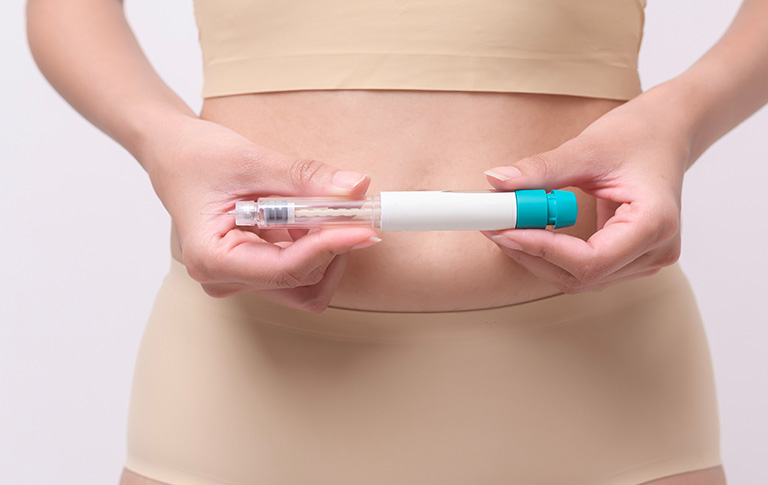
Having more eggs available increases your chances of at least one of them developing into an embryo and, hopefully, one of your embryos will eventually develop into a tiny baby. Ovarian stimulation involves taking hormone medications via injections, which our IVF clinic nurses will teach you how to self-administer. Throughout this process, we will monitor the development of the egg-containing follicles in your ovaries through ultrasound scans and blood tests.
Once our ultrasound scans and blood tests show that your ovarian follicles have reached a certain size, you will have a trigger medication.
The trigger medication is an injection or a nasal spray of another hormone that signals the eggs to mature and be released from the ovaries. Timing here is exceedingly important – your eggs need to be mature and available for retrieval at the right time. Our nurses will give you detailed guidance on when and how to take this trigger hormone. The collection procedure is done within about half an hour under light sedation. Using an ultrasound probe and fine needle, Dr Reyftmann retrieves your eggs directly from your ovaries.
If you are conceiving as a couple, your partner will provide a semen sample. Your retrieved eggs and semen sample (or donor sperm) will be taken to our state-of-the-art laboratory facilities under the care of an embryologist.
The semen sample is examined in our lab to assess the health of the sperm. In some cases, if there is a significant concern with the sperm’s ability to swim to and penetrate your egg in the laboratory dish, Dr Reyftmann may suggest intracytoplasmic sperm injection instead of regular IVF, which involves injecting a sperm cell directly into the egg. If this is not necessary, our embryologist will mix the sperm with your eggs and allow them to fertilise on their own. This step is what gives IVF its name – in vitro (outside the body) fertilisation.
After fertilisation in the previous step, our embryologist examines each egg under a high powered microscope to see which have successfully been fertilised by sperm to become an embryo. We let these embryos develop in a specialised incubator for several days. If you have chosen to undertake PGT, we can organise it at this point.
On or around day 5 of the embryo development, we choose the most robust one with the highest chance of developing into a healthy baby for transfer. This transfer is typically a quick and painless procedure, using a long, thin tube called a catheter to place the embryo into your womb. In rare cases, we may transfer more than one embryo. Any viable embryos we didn’t need for the transfer can be frozen for a future pregnancy if you choose.
This step is by far the hardest but unfortunately there’s no way to speed it up. Around two weeks after your embryo transfer, we order a pregnancy blood test.
Though it may be tempting to take a home pregnancy (urine) test earlier, remember that a blood test is more accurate. The hormones that you’ve been taking during your IVF treatment can also confuse the results of a home pregnancy test, particularly if you take it too soon.
Part of your consultation with Dr Reyftmann is deciding on the best fertility treatment option for your situation. This discussion comes after he has performed a thorough investigation of all factors that may be impacting your chances of conceiving, including an assessment of both your own fertility and your partner’s if seeking treatment as a couple.
IVF is not always Dr Reyftmann’s first recommendation. He prefers a stepwise approach, beginning with simpler and less invasive solutions such as lifestyle changes or counselling on ovulation tracking. If these methods are ineffective, he will then ask you to consider more intensive fertility treatments such as IVF.
IVF may be a suitable option if you have:
You may also want to consider IVF if you’re an older woman as this can help to overcome the age-related decline in your natural fertility.
