Although IVF is the more well-known assisted reproductive technology, IUI can be a more cost-effective, less invasive treatment option. Unless your circumstances and fertility factors mean your chances of success are significantly higher with IVF, Dr Reyftmann will often suggest you try IUI first.
Where IVF involves fertilising an egg with sperm in a laboratory dish (in vitro meaning outside the body), IUI aims to allow sperm to fertilise the egg in vivo, in the natural environment of a woman’s womb.
If you are undergoing IUI treatment as a couple, your partner will need to provide a semen sample. If you’re using donor sperm, we will organise delivery of the semen sample from your selected donor.
The fresh sperm sample from your partner needs to be washed and prepared. This involves removing the unnecessary fluids and concentrating the healthy sperm together. Healthy sperm are identified by their ability to swim and burrow through the outer layer of your egg.
The timing of inserting the sperm into your womb is everything. We can either work around your natural cycle or we can use medications to encourage your cycle to work around us.
If following the timing of your natural cycle, we will need to monitor you through blood tests and ultrasounds so we can identify the day of your ovulation. This is the day we want to insert the sperm into your uterus for the highest chances of conception. If your preference is to use ovarian stimulation, our fertility nurses will teach you how to use hormone injections at home to induce ovulation. This makes the timing more predictable and is also a necessity if your cycles are irregular.
The optimal time for the final step of the intrauterine insemination process is around 24 to 36 hours after blood tests detect a surge of luteinising hormone, or after you’ve administered the trigger hormone injection, because this means you’re about to ovulate.
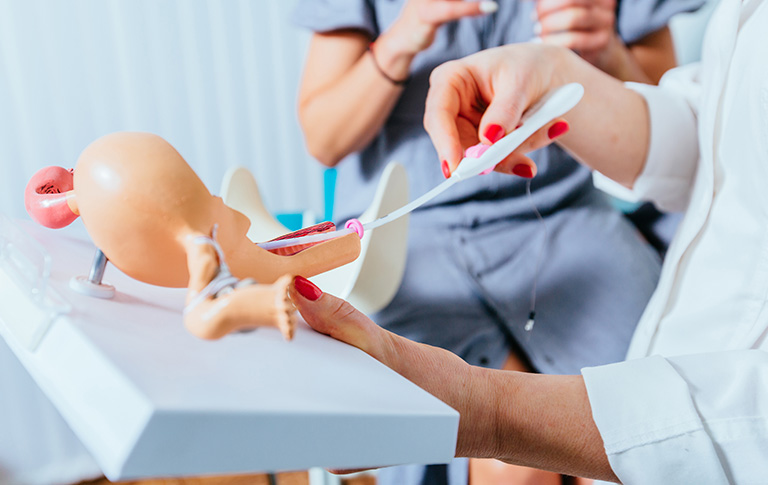
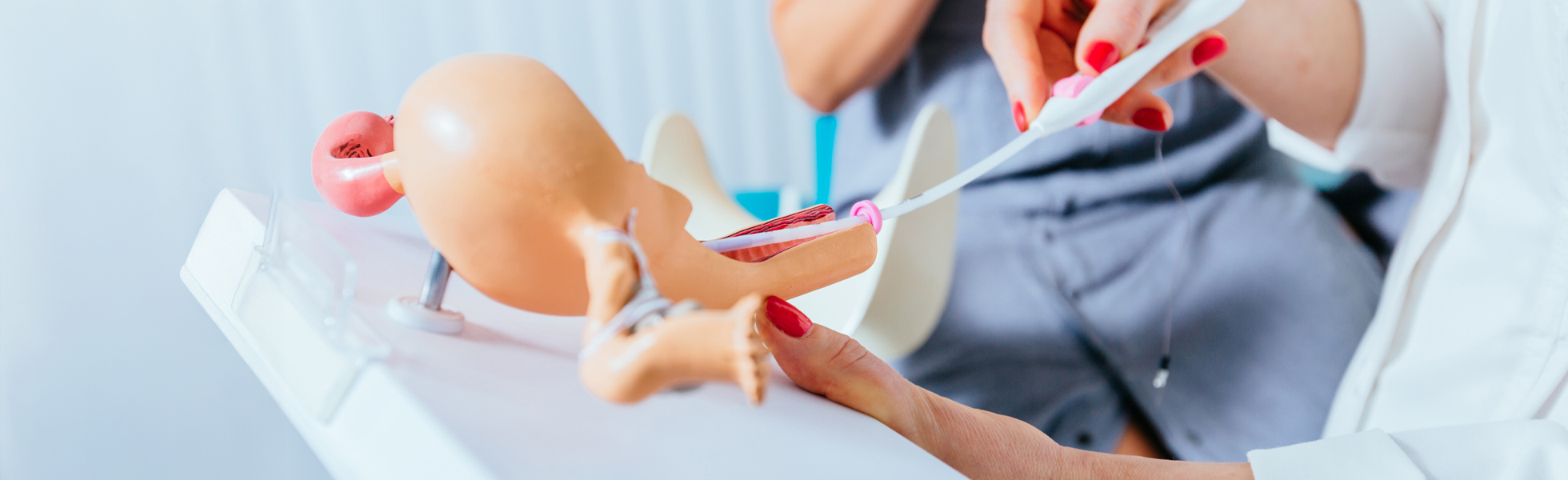
A long, thin tube called a catheter is inserted via your cervix to release the sperm into your uterus. From here, the sperm need to swim to the egg and penetrate it on their own. This procedure is relatively simple and you won’t need sedation or any significant time off work afterward.
We get the most accurate results from a pregnancy test if we wait for about 2 weeks after the insemination procedure. This test is taken as a blood test.
Although waiting is the most difficult part, taking a pregnancy test any earlier carries the risk of a false positive – telling you you’re pregnant when you’re not. This is especially true if you have been using hormone medications for ovarian stimulation.
During your early consultations with Dr Reyftmann, he will identify whether IUI is a suitable fertility treatment option for your circumstances. As his preference is to present you with the least invasive strategies for overcoming infertility first, many of our patients start by taking steps to improve their fertility through lifestyle therapies. If you have no factors that mean IUI is unlikely to be successful for you, and lifestyle modifications aren’t helping enough, he may recommend IUI.
IUI may be a suitable solution if you have:
IUI can also be used for same-sex female couples or single mothers by choice using donor sperm.
